Adjust contrast
Schriftgröße auswählen
Zum Bereich in Leichter Sprache Simple language

Product Search

Testing and Diagnostic Technology for E-Mobility and Alternative Powertrains

Leak Testers for HV Batteries and High-Voltage Components

Professionally test high-voltage battery housings and high-voltage components for leaks! The housing of a high-voltage battery protects the battery cells, electronics, and other components from external factors such as moisture and dirt. After certain repair, disassembly, or maintenance work, a high-voltage battery leak test may therefore be required in accordance with the vehicle manufacturer’s specifications.

Autotestgeräte Leitenberger offers professional leak testers for high-voltage batteries and other HV components in electric and hybrid vehicles. Depending on the tester and manufacturer’s specifications, tests can be performed using overpressure or vacuum, as well as using the pressure drop method or the flow or mass flow method.

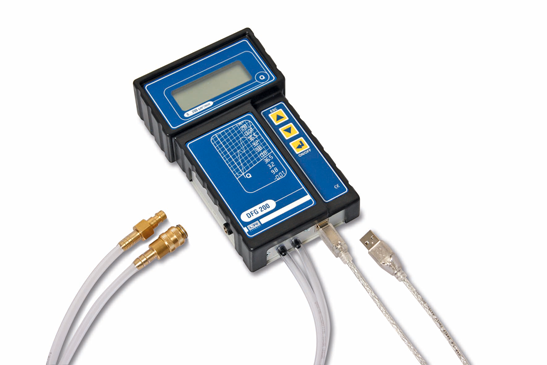
For pressure drop testing, various digital testers are available for different measurement and pressure ranges. The DFG 50 and DFG 200 flow meters can also be used to determine very small air flows or leak rates. The LTA 01_LR automatic tester enables programmable test sequences using pressure change and flow methods, as well as the documentation of test results.

If a leak is to be not only detected but also precisely located, the LTBG 04 can be used to introduce tracer gas into a suitable test specimen, after which a suitable leak detector can be used to search for escaping tracer gas.

In addition to HV battery housings, other high-voltage components—such as inverters, DC/DC converters, on-board chargers (OBCs), electric drives, or HV air conditioning compressors—can also be tested for leaks, depending on the component and manufacturer’s specifications.

For HV batteries with pressure-equalization elements, special tools, test caps, and test adapters are also available. This allows the battery to be prepared in accordance with the respective test specifications and a defined test pressure to be introduced into or maintained within the battery housing.

Test pressure, vacuum, test duration, stabilization time, and permissible limits are not universal. The specifications provided by the vehicle or component manufacturer are always decisive.

Frequently Asked Questions About Leak Testing of HV Batteries

Leak testing of high-voltage batteries differs significantly from conventional pressure testing of small automotive components. Large housing volumes, low test pressures, pressure-equalization elements, and very small permissible leakage rates place special demands on the test equipment and test procedures. The following questions explain the most important procedures and areas of application.

  • Why does a high-voltage battery housing need to be leak-proof?

    The battery housing protects the battery cells, electrical connections, and electronic components inside from external influences.

    These include, in particular, moisture, water, dirt, and other contaminants.

    At the same time, many battery systems feature special pressure-equalization elements that compensate for pressure differences during normal operation—such as those caused by changes in temperature or altitude.

  • When should the leak-tightness of a high-voltage battery be checked?

    Whether and when a leak test is required depends on the vehicle, the battery system, and the scope of work.

    In particular, after opening and resealing a battery enclosure or after certain repairs, the vehicle manufacturer may require a leak test.

    The vehicle manufacturer’s specific repair or inspection instructions are therefore authoritative.

  • Which high-voltage components can be tested for leaks?

    In addition to high-voltage battery enclosures, the following components—for example—can also be tested, depending on the part and test specifications:

    • DC/AC converters
    • AC/DC converters
    • DC/DC converters
    • inverters
    • electric motors or electric generators
    • HV air conditioning compressors
    • on-board chargers (OBC)

    The appropriate test method and test pressure depend on the specific component and the manufacturer’s specifications.

  • What methods are available for leak testing a high-voltage battery?

    For workshop testing of HV battery enclosures, the following methods are particularly suitable, depending on the manufacturer’s specifications:

    • Pressure drop or pressure loss method
    • Vacuum test
    • Flow or mass flow method
    • Leak detection using forming gas or a suitable test gas

    These methods address different issues in some cases and can therefore complement one another.

  • How does the pressure drop method work?

    In the pressure drop method, a defined overpressure—or, depending on the procedure, a defined vacuum—is first generated in the test specimen.

    After a specified stabilization phase, the test specimen is disconnected from the pressure source, or the system is sealed.

    The pressure is then monitored over a defined test period to observe how it changes.

    A pressure drop greater than the permissible limit may indicate a leak.

  • What is the difference between a pressure drop test and a flow measurement?

    In a pressure drop test, the rate at which a preset pressure changes over a defined period of time is observed.

    In the flow or mass flow method, on the other hand, a defined test pressure is maintained, and the amount of air or gas that must be replenished is measured.

    This replenished volume corresponds to the flow caused by existing leaks and can be evaluated as a leak rate.

  • What does “mass flow” mean in a leak test?

    “Mass Flow” refers to a flow measurement method.

    This method not only monitors changes in pressure but also directly measures the flow of air or gas caused by a leak.

    This can be a helpful supplement to pressure drop testing, particularly in cases of very small leaks and large test volumes.

  • What is a leakage rate?

    The leak rate describes the amount of a medium that escapes through a leak within a specified time or that must be replenished to maintain the test pressure.

    It is not possible to generally specify what leak rate is permissible for a particular battery case.

    The permissible limit must be taken from the respective manufacturer’s or test specifications.

  • Is pressure drop the same thing as leak rate?

    No.

    A measured pressure drop primarily describes the change in pressure over a defined period of time.

    A leak rate, on the other hand, describes a volumetric or mass flow rate through a leak.

    Although these two quantities are related, they must not be equated without taking into account the test volume, temperature, test pressure, and test method.

  • Why is a stabilization period important for a HV battery?

    When filling or evacuating a large battery housing, pressure and temperature conditions may initially change.

    Elastic housing components, hoses, and seals may also react to a change in pressure.

    A defined stabilization or settling period helps distinguish such effects from an actual leak.

    The required time depends on the prescribed test procedure.

  • Why does temperature affect a leak test?

    Temperature affects the pressure of a trapped gas.

    If the temperature of the test specimen or the environment changes during a sensitive pressure drop measurement, the measured pressure may also change, even though no additional leak has occurred.

    Constant or sufficiently stable test conditions therefore improve the reliability of the measurement.

  • Can a high-voltage battery be tested under positive pressure?

    Yes, provided that the test procedure specified by the manufacturer or intended for that specific battery housing permits an overpressure test.

    Leitenberger offers a variety of test instruments for this purpose, featuring low-pressure measurement ranges with the appropriate fine resolution.

    However, the maximum permissible test pressure must never be derived as a general rule from the test instrument’s measurement range.

  • Can a high-voltage battery be tested using a vacuum?

    Yes. Various Leitenberger testers allow for not only pressure testing but also vacuum testing.

    Whether to use overpressure, vacuum, or both methods depends on the testing specifications for the vehicle or component in question.

  • What test pressure is used for a high-voltage battery?

    There is no universal test pressure for all high-voltage batteries.

    Battery housings differ in terms of volume, design, material, seals, and pressure equalization systems.

    The permissible test pressure or vacuum must therefore be taken from the specifications provided by the respective vehicle or component manufacturer.

  • Why can excessively high test pressures be problematic?

    HV battery housings can be large-volume, thin-walled, and pressure-sensitive.

    Excessive positive or negative pressure can place mechanical stress on or damage the housing, seals, or other components.

    Therefore, only the test parameters approved for the specific application may be used.

  • What is a pressure-equalizing element in a high-voltage battery?

    A pressure-equalizing element enables controlled pressure equalization between the battery housing and the surrounding environment during normal vehicle operation.

    Otherwise, temperature changes and differences in altitude can lead to pressure differentials within the sealed battery housing.

    Depending on the design, this function is performed, for example, by a gas-permeable, water-repellent membrane.

  • Why do pressure-equalizing elements need to be removed during some leak tests?

    A pressure-equalizing element is designed to eliminate pressure differences.

    If the test pressure specified for the leak test exceeds the pressure-equalizing element’s response range, the test pressure could escape through it and distort the measurement result.

    For such battery systems, the original element is therefore removed in accordance with the manufacturer’s specifications for the test and replaced with a suitable test plug or test adapter.

  • How are pressure equalization elements prepared for leak testing?

    With the OEW 02, Autotestgeräte Leitenberger offers a tool designed for the low-impact removal and installation of pressure-equalizing elements.

    Using the PSBG 01 test adapter set, the opening can then be sealed or—depending on the test configuration—used to apply the test pressure.

    After the test is complete, the original component is reinstalled according to the manufacturer’s specifications.

  • Can the test pressure be applied through the opening in the pressure-equalizing element?

    This is possible with appropriately designed battery systems and test adapters.

    The test adapter can be used to introduce pressure or vacuum into the battery housing through the opening of the removed pressure-equalization element.

    The connection point to be used depends on the battery system and the applicable test instructions.

  • What is the difference between a leak test and leak detection?

    A leak test or tightness test first answers the question:

    Is the component leak-tight within the specified limit?

    A leak detection test, on the other hand, answers:

    Where is the leak located?

    A pressure drop or mass flow measurement can detect or quantify a leak. For precise localization, other methods—such as formier gas leak detection—can be used in conjunction with these.

  • How does leak detection using forming gas work?

    In a suitable test procedure, a test specimen is exposed to forming gas.

    In the application intended by Leitenberger, forming gas consists of 95% nitrogen and 5% hydrogen (N95/H5).

    The surface or the relevant sealing area is then inspected using a suitable leak detector. If forming gas escapes through a leak, the leak location can be identified.

  • Why is forming gas used in addition to pressure testing?

    A pressure test can reveal that a test specimen has an unacceptable leak.

    However, it does not necessarily indicate where this leak is located.

    Trace gas testing is therefore particularly well-suited as a supplementary method for locating a leak that has already been detected or is suspected.

  • Is a water bath suitable for leak testing high-voltage components?

    The high-voltage leak tests offered by Leitenberger involve a non-destructive and residue-free test using air or a suitable test gas.

    The traditional bubble test in a water bath is not the intended test method for these high-voltage components.

    A residue-free test method is particularly advantageous for electrical and electronic components.

  • What is the purpose of LTBGD test equipment?

    LTBGD digital testers are used to precisely generate pressure or vacuum and measure pressure for leak tests.

    Depending on the model, they differ in terms of, among other things:

    • Measurement range
    • Resolution
    • Pressure or vacuum generation
    • Suitability for different test volumes and components

    The appropriate tester must be selected based on the specific test requirements.

  • What is the difference between LTBGD 03_EV and LTBGD 05_EV?

    Both devices operate in the high-resolution range of -50 to +50 mbar and are suitable, among other things, for leak testing high-voltage battery housings.

    The LTBGD 05_EV is specifically designed for large-volume battery housings and generates pressure or vacuum using workshop compressed air.

    The appropriate model for each battery depends on the test volume and the manufacturer’s specifications.

  • What are LTBGD 10_EV and LTBGD 12_EV intended for?

    The LTBGD 10_EV and LTBGD 12_EV feature an extended measurement range of -200 to +200 mbar.

    They are designed for leak testing various high-voltage components, such as converters, electric drives, high-voltage air conditioning compressors, and on-board chargers.

    Here, too, the specific test task determines which device is suitable.

  • What is the advantage of the LTBGD 30_LR?

    The LTBGD 30_LR is designed for large-volume high-voltage components and enables pressure tests up to +200 mbar.

    With a resolution of 0.1 mbar, even slight changes in pressure can be detected.

    Pressure is generated using the existing workshop compressed air supply.

  • What are the DFG 50 and DFG 200 used for?

    The DFG 50 and DFG 200 are flow meters designed to measure small air or gas flows.

    They supplement the traditional pressure drop test with the mass flow method.

    The DFG 50, for example, measures in the particularly low range of 0 to 50 cm³/min and can be used in conjunction with the LTBGD 03_EV or LTBGD 05_EV.

  • What is the advantage of an automatic leak test using the LTA 01_LR?

    The LTA 01_LR enables automated and reproducible test sequences.

    Among other things, test profiles can be:

    • set with test pressure or vacuum
    • test duration
    • tolerances
    • multiple test steps

    and saved.

    The device supports both the pressure-change and flow-rate methods. The measurement results can be documented as a test report.

    This is particularly useful when test procedures need to be standardized and results documented in a traceable manner.

  • Why is it important to document an HV battery leak test?

    For repair processes related to safety and quality, a documented inspection can provide verifiable evidence that the required inspection was performed.

    The specific values and information that must be documented depend on the vehicle manufacturer, the operational process, and, where applicable, additional quality requirements.

    Automated testing equipment can support the standardized documentation of such measurements.

  • Does passing a pressure test automatically mean that a specific IP rating has been verified?

    No.

    A workshop leak test conducted according to specific repair specifications is not the same as a comprehensive test or certification of an IP protection rating.

    Passing a leak test initially only confirms that the test specimen meets the threshold values defined for that test procedure.

  • Is the battery case leak test the same as the battery cooling system test?

    No.

    The battery housing and the cooling circuit are separate systems and may have different test procedures and threshold values.

    The housing test focuses specifically on the external integrity and leak-tightness of the battery housing.

    The cooling circuit test checks whether the thermal management system or the respective cooling circuit is leak-tight and functional.

    For more information, see Thermal Management and Coolant Testers for Electric Vehicles.

  • Does the leak test replace an electrical safety test of the high-voltage battery?

    No.

    Leak testing and electrical safety are separate areas of testing.

    After certain repairs, insulation tests or other electrical safety tests may be required in addition to leak testing.

    You can find suitable testing equipment under HV Safety and Electrical Testing of Electric Vehicles.

  • Does the leak-tightness of a high-voltage battery indicate anything about its state of health?

    No.

    The leak test evaluates the battery housing and its leak-tightness.

    The State of Health (SoH), on the other hand, describes the health or aging status of the high-voltage battery.

    Special test devices for HV battery diagnostics and State of Health (SoH) testing are available for this test.

  • Who is authorized to perform a leak test on a high-voltage battery?

    The required qualifications depend on the specific work, the condition of the high-voltage system, and the relevant work procedure.

    Work on high-voltage vehicles may only be performed by appropriately qualified personnel in accordance with applicable company, safety, and vehicle manufacturer-specific guidelines.

    For more information and testing equipment, see High-Voltage Safety and Electrical Tests on Electric Vehicles.

Cookie settings
This website uses cookies that enable you to use services offered by external providers, such as YouTube or Google Maps. The legal basis here is Art. 6 DSGVO (1) a.

Here you can object to the anonymized recording of your user behavior by MATOMO. For this purpose, we store a cookie on your computer to respect this decision also on subsequent visits.

Please note that depending on your settings, some functions may not be available.

You can find more information in our Privacy policy

Matomo settings

Attention: When you object to tracking, a Matomo deactivation cookie is set that remembers your objection.