Adjust contrast
Schriftgröße auswählen
Zum Bereich in Leichter Sprache Simple language

Product Search

Test Equipment for Cooling Systems
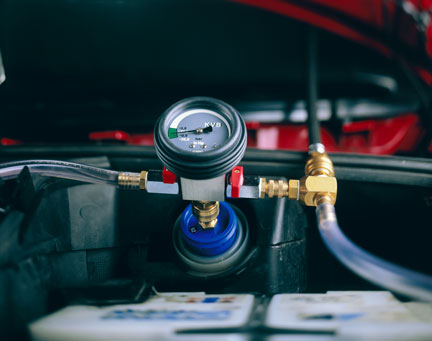
Vacuum cooling system filler

Vacuum cooling system filler

Optimize the filling of cooling systems with our radiator vacuum filling devices

Autotestgeräte Leitenberger focuses on efficiency and reliability in the vehicle workshop. Our radiator vacuum filling devices are designed to enable fast, efficient and bubble-free filling of cooling systems and eliminate the need for subsequent venting.

Vacuum leak test - added safety

  • Thanks to the integrated vacuum leak test, our filling devices not only ensure working comfort, but also the certainty that only leak-proof cooling systems are filled. This important function prevents potentially leaking systems from being filled and ensures optimum cooling system performance right from the start.

Increasing efficiency through technology - using the Venturi nozzle

  • With the help of the Venturi nozzle, it is possible to create a vacuum in the cooling system using standard workshop compressed air (6...10 bar). As soon as this vacuum is stable, the cooling system can be filled quickly and without air bubbles by sucking in the prepared coolant. This process ensures efficient and smooth filling.

Wide range of applications - suitable for all vehicle types

  • Our radiator ventilation units have a wide range of applications and cover almost all vehicle types, including vehicles with combustion engines, hybrid and electric vehicles, and vehicles with fuel cells.The filling method adapts to any cooling system volume and is also ideal for bleeding parking heaters, making it an essential tool in any workshop.

Frequently Asked Questions About Radiator Vacuum Filling Devices

Radiator vacuum fillers enable fast, controlled, and largely bubble-free filling of vehicle cooling systems. They are used after repairs, during coolant changes, and for initial filling. Here, we answer frequently asked questions about selecting and using a vacuum filler for cooling systems.

  • What is a radiator vacuum filling device?

    A radiator vacuum filling unit is a professional workshop tool for evacuating and then filling a vehicle’s cooling system. Before filling, the air in the cooling system is extracted and a vacuum is created.
    If the vacuum remains stable, the prepared coolant can be drawn into the cooling system through a filling hose. This allows cooling circuits to be filled quickly and to the highest possible fill level.
    Radiator vacuum fillers are also known as cooling system vacuum fillers, coolant fillers, radiator bleeding units, or vacuum bleeding units.

  • How does vacuum filling of a cooling system work?

    The filling device is connected to the opening of the expansion tank or radiator using a suitable adapter. A vacuum is then created in the cooling system.

    With pneumatic radiator vacuum filling devices, the vacuum is generated using a Venturi nozzle and the workshop’s compressed air supply. Alternatively, electric vacuum pumps can be used.

    After the cooling system has been evacuated, check to ensure the vacuum remains stable. Next, insert the fill hose into the prepared coolant. Due to the existing vacuum, the cooling system draws in the coolant on its own.

    The exact procedure must comply with the vehicle manufacturer’s specifications and the operating instructions for the filling device being used.

  • What are the advantages of vacuum filling compared to standard filling?

    With conventional filling via the expansion tank, air may remain in the cooling system. Air pockets can form, particularly in branched cooling circuits, systems with multiple heat exchangers, or those with elevated piping.

    Vacuum filling removes a large portion of the air present before filling begins. The coolant is then drawn into the system by the vacuum. This promotes a uniform filling process and reduces the effort required for subsequent manual bleeding.

    In addition, this method allows for a check before filling to verify whether the cooling system maintains the created vacuum.

  • When should a cooling system be filled using a vacuum?

    Vacuum filling is particularly useful when the cooling system has been completely or partially drained during a repair. Typical applications include:

    • Coolant replacement
    • Radiator replacement
    • Water pump replacement
    • Replacement of coolant hoses
    • Replacement of the thermostat or thermostat housing
    • Work on the heater core
    • Repairs to the thermal management system
    • Work on the cooling systems of hybrid and electric vehicles
    • Initial filling of new or overhauled systems

    Whether vacuum filling is required or recommended for the vehicle in question is specified in the vehicle manufacturer’s repair information.

  • Does a radiator vacuum filling device replace the need to bleed the cooling system?

    Vacuum filling can significantly reduce or even eliminate the need for conventional manual bleeding in many applications. Since the air is removed from the system before filling, far fewer air pockets are created than when simply pouring in the coolant.

    Nevertheless, vehicle-specific guidelines must be followed. Depending on the vehicle, additional steps may be required after filling. These may include, for example, activating electric coolant pumps, opening certain valves, or following a bleed procedure specified by the vehicle manufacturer.

  • Can a vacuum filling device also be used to check the tightness of the cooling system?

    Yes. Before filling, a check is performed to determine whether the cooling system maintains the created vacuum for the specified test period. If the vacuum drops, there may be a leak in the cooling system or in the connected test setup.

    In this case, the cooling system should not be filled immediately. First, the adapter, hoses, couplings, and accessible components of the cooling system must be inspected.

    However, the vacuum leak test does not always replace a separate pressure test using a cooling system tester. Which test procedure is required depends on the diagnostic task and the vehicle manufacturer’s specifications.

  • What does it mean if the vacuum created does not remain stable?

    A dropping vacuum may indicate a leak. Possible causes include, for example:

    • a filling adapter that is not completely sealed
    • a contaminated or damaged sealing surface
    • a quick-connect coupling that is not fully engaged
    • a leaky hose or connection
    • an open valve
    • a leak in the expansion tank
    • a leak in a hose, radiator, or heat exchanger
    • a defective gasket or other leaky component

    Before proceeding with further diagnosis, first check whether the filling device and the entire connection assembly are correctly installed and leak-free.

  • What type of compressed air is required for a pneumatic radiator vacuum filling device?

    In pneumatic radiator vacuum fillers, the vacuum is generated using a Venturi nozzle. The Leitenberger KVB 01, KVB 01.1, and KVB 02 units are designed for use with standard workshop compressed air at pressures ranging from 6 to 10 bar.

    In addition to the pressure, the compressor must provide a sufficient air flow rate. If the compressed air supply is too low or fluctuates significantly, the required vacuum may not be reached at all or only slowly.

    The compressed air should be clean and treated in accordance with the requirements of the device being used.

  • Does a radiator vacuum filling device work even without compressed air?

    Yes. In addition to pneumatic Venturi filling devices, there are electric vacuum pumps and complete electric evacuation, filling, and testing systems.

    Electric solutions are particularly useful when there is insufficient compressed air available in the workshop, when mobile use is planned, or when a highly controlled and reproducible filling process is required.

    Among other things, Autotestgeräte Leitenberger offers battery-powered, 12-volt, and 230-volt vacuum pumps as accessories.

  • How much vacuum needs to be created in the cooling system?

    The required vacuum level depends on the equipment used, the vehicle, and the specific cooling system. Therefore, no general limit should be applied to all vehicles and filling devices.

    It is crucial that the vacuum specified in the operating instructions is achieved and remains stable during the prescribed test period. With automatic or electric filling devices, the final vacuum, test time, and other process parameters can be set or monitored depending on the device.

  • Which adapter is needed for vacuum filling?

    The required adapter depends on the shape and design of the opening on the expansion tank or radiator. There are generally two connection options available:

    For a unit with a quick-connect coupling, a matching vehicle-specific radiator test adapter is used. The KVB 01 radiator vacuum filling unit can be combined with Leitenberger radiator test adapters from the K, KS, and KW series, as well as with suitable universal adapters.

    Alternatively, a unit with a rubber cone can be used. The conical rubber seal is attached directly to a suitable cooling system opening and allows for a universal connection within its intended range of application.

    The adapter must fit securely and seal the opening in a vacuum-tight manner. An unsuitable or incorrectly installed adapter may prevent a stable vacuum from being established.

  • What is the difference between a vehicle-specific adapter and a rubber cone?

    A vehicle-specific adapter is selected to fit the respective opening of the expansion tank or radiator. It is securely screwed on or connected to the existing closure system. This solution provides a defined and reproducible connection.

    A rubber cone, on the other hand, is placed directly into or onto a suitable cooling system opening. Thanks to its conical shape, it can be used with openings of various sizes.

    Which option is more suitable depends on the vehicle fleet, the accessibility of the opening, and workshop procedures. Multi-brand repair shops often benefit from a combination of vehicle-specific and universal connection options.

  • How much coolant needs to be prepared for vacuum filling?

    At least the fill quantity specified by the vehicle manufacturer must be prepared. In addition, there should be enough reserve so that the end of the suction hose remains completely submerged in the coolant throughout the entire filling process.

    If air is drawn in through the suction hose during filling, it can enter the previously evacuated cooling system. A sufficiently large, clean, and preferably graduated coolant container therefore facilitates the filling process and makes it easier to monitor the amount drawn in.

  • At what height should the coolant reservoir be positioned?

    To ensure a smooth filling process, it is best if the coolant container provided and the vehicle’s expansion tank are at approximately the same height.

    The suction hose must not be kinked and must remain securely submerged in the coolant throughout the entire filling process. In addition, follow the instructions in the filling device’s user manual.

  • Can any coolant be filled using a vacuum fill machine?

    In general, suitable liquid coolants can be drawn in using a vacuum coolant fill machine designed for this purpose. However, it is essential that only the coolant approved by the vehicle manufacturer be used at the specified concentration.

    Different coolants must not be mixed together without approval. The filling unit, hoses, and storage tank must be clean to prevent contamination of the new coolant.

    For special applications, such as fuel cell cooling systems, it may be necessary to use the unit strictly for a single type of coolant.

  • Can hybrid and electric vehicles be filled using a radiator vacuum filling device?

    Appropriate radiator vacuum filling devices can also be used for cooling and thermal management circuits in hybrid and electric vehicles.

    These vehicles may have several separate cooling circuits, for example, for the high-voltage battery, the power electronics, the electric motor, the charger, and the cabin climate control system. Therefore, the correct connection, the approved coolant, and the specified filling process must be clearly identified.

    Work on high-voltage vehicles may only be performed by appropriately qualified personnel and in accordance with the vehicle manufacturer’s specifications. Special evacuation, filling, and testing equipment is available for complex thermal management systems.

  • Can fuel cell vehicles also be refueled using a vacuum?

    Yes, there are vacuum filling devices specifically designed for the cooling systems of fuel cell vehicles.

    The Leitenberger KVB 01_BZ is designed for leak testing and subsequent vacuum filling of fuel cell cooling systems. The unit must be used exclusively with the specified coolant and only with that specific type of coolant.

    Since requirements vary depending on the vehicle and cooling circuit, the manufacturer’s specifications must be strictly followed.

  • Can a radiator vacuum filling device also be used for auxiliary heaters?

    Suitable radiator vacuum fillers can also be used to fill and bleed coolant circuits with auxiliary heaters.

    Auxiliary heaters and additional heat exchangers can extend the cooling circuit and create additional areas where air can accumulate. Vacuum filling helps remove air from the system before the coolant is added.

    Here, too, the filling and bleeding procedure specified by the vehicle or auxiliary heater manufacturer must be followed.

  • Can a cooling system be vacuum-filled while the engine is warm?

    The cooling system must not be opened without proper control while it is hot or under pressure. Escaping hot coolant and steam can cause serious injury.

    Before opening the cooling system and connecting the filling device, the cooling system must be cooled down and depressurized in accordance with the vehicle manufacturer’s specifications. Follow the personal safety precautions and instructions in the owner’s manual.

  • Which radiator vacuum filling device is right for my workshop?

    The choice depends on the vehicle fleet, the available compressed air supply, and the frequency of cooling system work.

    The KVB 01 with quick-connect coupling is suitable for workshops that already have compatible Leitenberger radiator test adapters or wish to use various vehicle-specific adapters.

    The KVB 01.1 combines the filling unit with a quick-connect coupling and a universal adapter for radiator openings ranging from 27 to 42 millimeters.

    The KVB 02 with rubber cone enables universal connection to suitable cooling system openings.

    Electric vacuum pumps are an alternative when work needs to be performed independently of the workshop’s compressed air supply.

    Automatic evacuation, filling, and testing devices are particularly suitable for regularly recurring processes, test benches, development, rework, small-batch production, and complex thermal management systems. Depending on the model, they enable defined and reproducible filling and testing procedures.

    For fuel cell cooling systems, the KVB 01_BZ is available—a solution specifically designed for single-type use.

Cookie settings
This website uses cookies that enable you to use services offered by external providers, such as YouTube or Google Maps. The legal basis here is Art. 6 DSGVO (1) a.

Here you can object to the anonymized recording of your user behavior by MATOMO. For this purpose, we store a cookie on your computer to respect this decision also on subsequent visits.

Please note that depending on your settings, some functions may not be available.

You can find more information in our Privacy policy

Matomo settings

Attention: When you object to tracking, a Matomo deactivation cookie is set that remembers your objection.