Adjust contrast
Schriftgröße auswählen
Zum Bereich in Leichter Sprache Simple language

Product Search

Testing and Diagnostic Technology for E-Mobility and Alternative Powertrains

Thermal Management & Coolant Testing for Fuel Cell Vehicles

Professionally test, analyze, and fill fuel cell cooling systems! Fuel cell vehicles generate the electrical energy needed to power the vehicle electrochemically from hydrogen and oxygen. In addition to electrical energy, this process also produces water and heat. Effective fuel cell thermal management therefore ensures that the fuel cell stack operates within its intended temperature range.

Particularly in liquid-cooled PEM fuel cells (PEMFC), the coolant must meet specific requirements. In addition to heat transfer, freeze protection, and corrosion protection, other important test parameters may include very low or precisely defined electrical conductivity, the chemical state of the coolant, and correctly adjusted freeze protection.

Autotestgeräte Leitenberger offers professional testing and service equipment for various tasks related to the fuel cell cooling circuit.

With the LWM 01_LR and LWM 02_LR conductivity meters, the electrical conductivity of suitable fuel cell coolants can be measured and documented. A conductivity value that deviates from the manufacturer’s specifications may indicate, among other things, aging, contamination, or changes within the cooling circuit.

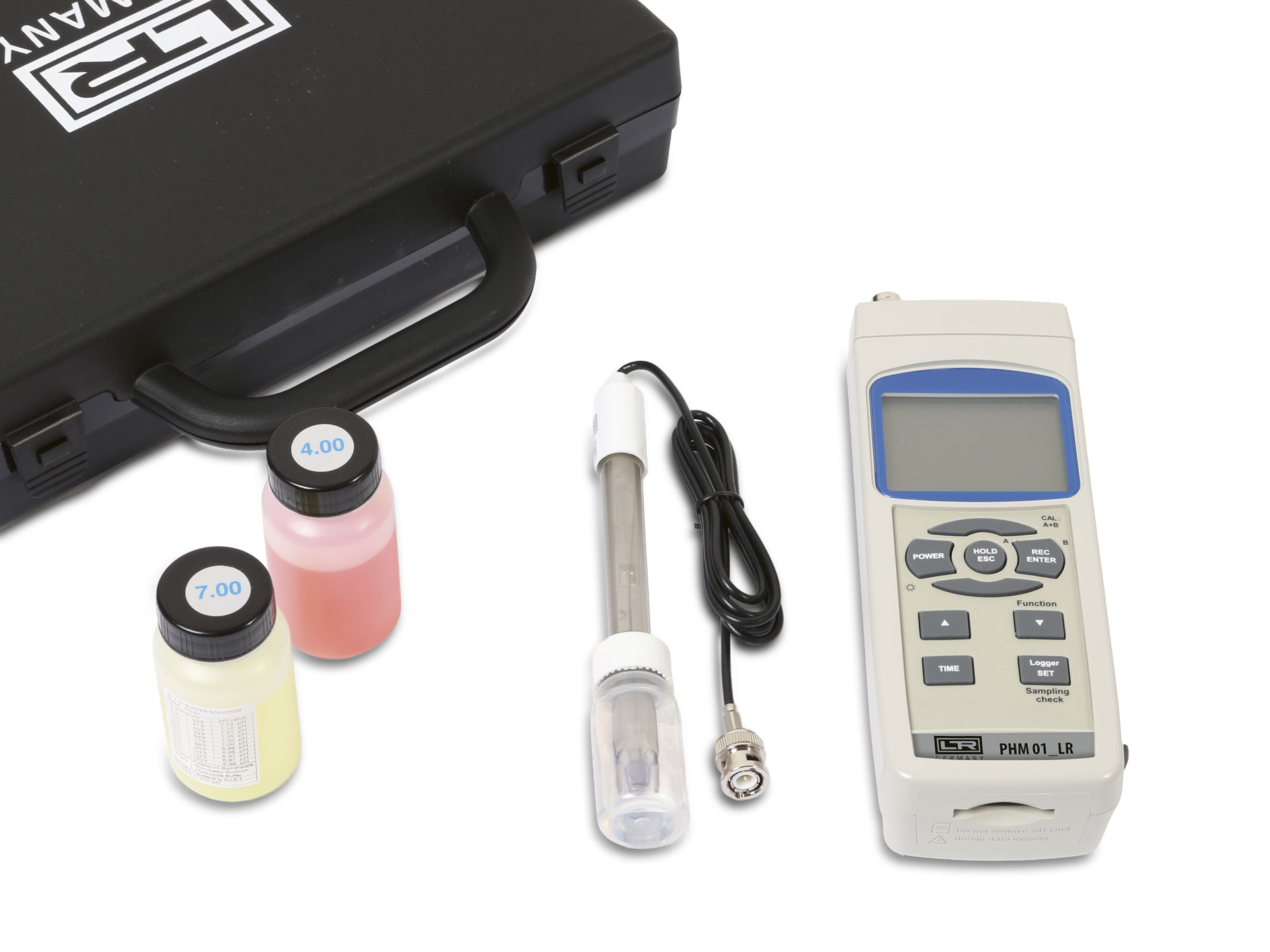
In addition, the PHM 01_LR enables precise measurement of the pH value. This allows for the recording of another important parameter—in addition to electrical conductivity—for assessing the chemical condition of suitable coolants.

The RFM 05_RGM is also available—a refractometer specifically designed for ready-to-use PEMFC coolant mixtures to monitor antifreeze protection.

Leitenberger offers two different solutions for service and filling operations:

The KVB 01_BZ was developed specifically for the use of single-type fuel cell coolant. The cooling circuit is first evacuated and checked via a vacuum hold test. The intended coolant can then be drawn in quickly and largely bubble-free via the existing vacuum.

For larger, reproducible filling processes, the KVBW 01_230VAC_LR—a mobile evacuation, filling, and testing unit—is available. The system operates with a high-performance electric vacuum pump and is particularly suitable for rework, test benches, small-batch production, and professional service processes.

With this, Autotestgeräte Leitenberger covers key tasks related to fuel cell coolant and thermal management:

  • Measuring electrical conductivity
  • Checking the pH value
  • Checking for antifreeze
  • Evacuating the cooling circuit
  • Checking for leaks via a vacuum hold test
  • Filling the cooling system properly and largely free of air bubbles

Coolant type, permissible conductivity, pH range, antifreeze, replacement intervals, and requirements for the filling process vary among different fuel cell systems. Therefore, the specifications of the vehicle, fuel cell, or coolant manufacturer are always decisive.

Frequently Asked Questions About Fuel Cell Coolants and Thermal Management

Fuel cell cooling systems place special demands on coolant quality, purity, and electrical conductivity. The following questions explain how thermal management works, the unique characteristics of PEM fuel cells, the testing of conductivity, pH, and antifreeze, as well as the proper evacuation and filling of such cooling systems.

  • What is a fuel cell?

    A fuel cell converts chemical energy into electrical energy through an electrochemical process.

    In a hydrogen fuel cell, hydrogen and oxygen react with each other. This reaction produces electrical energy, water, and heat.

    The electrical energy generated can then be used to power an electric motor.

  • What does PEMFC stand for?

    PEMFC stands for Proton Exchange Membrane Fuel Cell or Polymer Electrolyte Membrane Fuel Cell.

    The PEM fuel cell is a fuel cell technology that, due to its characteristics, is used in particular for mobile applications and fuel cell vehicles.

  • Is a fuel cell vehicle also an electric vehicle?

    Yes.

    The vehicle is actually powered by electricity.

    The main difference from a battery electric vehicle lies in how the electrical energy is supplied.

    In a battery electric vehicle (BEV), the drive energy is primarily stored in a high-voltage battery.

    In a fuel cell vehicle, electrical energy is additionally generated by the fuel cell from the hydrogen carried on board.

    Fuel cell vehicles generally also have a high-voltage battery or an electrical energy storage system and a high-voltage system.

  • Why does a fuel cell need thermal management?

    When a fuel cell is in operation, it generates heat in addition to electrical energy.

    Thermal management ensures that this heat is dissipated in a controlled manner and that the fuel cell stack is maintained within its intended temperature range.

    Controlled temperature is therefore an important prerequisite for the reliable operation of the fuel cell system.

  • What is a fuel cell stack?

    A fuel cell stack consists of several individual cells connected in series.

    By combining many individual cells, the electrical voltage and power required for a given application can be generated.

    Depending on the design, the stack includes, among other things, membrane electrode assemblies, bipolar plates, and other functional layers or components.

  • Why is cooling a PEM fuel cell stack particularly challenging?

    On the one hand, the cooling system must reliably dissipate the heat generated during operation.

    On the other hand, the coolant flows very close to electrically active or conductive components of the fuel cell stack.

    For this reason, coolants developed specifically for fuel cell systems are used, in which, among other things, very low or precisely defined electrical conductivity is of great importance.

  • What are the functions of fuel cell coolant?

    Depending on the specific system, the coolant can perform several functions.

    These include, in particular:

    • Absorbing and dissipating heat
    • Maintaining specified operating temperatures
    • Freeze protection
    • Corrosion protection
    • Protection of the materials used in the cooling circuit
    • Maintaining a specified low level of electrical conductivity

    The exact requirements depend on the fuel cell system and the coolant used.

  • Why does fuel cell coolant need to have low electrical conductivity?

    Increased electrical conductivity can promote undesirable electrical currents—or leakage currents—through the cooling circuit and compromise the system’s electrical insulation.

    For this reason, specially formulated coolants with very low or controlled electrical conductivity are used in such fuel cell cooling systems.

    The permissible conductivity value depends on the specific fuel cell and coolant system.

  • Is there a general maximum conductivity value for every fuel cell coolant?

    No.

    There is no universal threshold value that applies to every fuel cell vehicle and every coolant.

    Special fuel cell coolants can have conductivities as low as a few µS/cm.

    However, the measured value must always be compared with the specifications provided by the vehicle, fuel cell, or coolant manufacturer.

  • In what unit is the electrical conductivity of the coolant measured?

    Electrical conductivity is often expressed in microsiemens per centimeter (µS/cm).

    For higher conductivities, millisiemens per centimeter (mS/cm) may also be used.

    For fuel cell coolants with particularly low conductivity, the µS/cm range is often relevant.

  • Why can the conductivity of a fuel cell coolant increase?

    Possible causes may include, for example:

    • Aging of the coolant
    • Contaminants
    • Introduction of dissolved ions
    • Mixing with an unsuitable coolant
    • Unsuitable top-off fluid
    • Material or corrosion byproducts
    • Residues in filling equipment or containers
    • Diminished effectiveness of an ion exchanger

    However, an elevated measurement value alone does not conclusively indicate the cause.

  • What is an ion exchanger in a fuel cell cooling system?

    An ion exchanger, or ion-exchange filter, can remove dissolved ions from the coolant.

    In this way, it helps maintain low electrical conductivity.

    In fuel cell cooling systems, the ion exchanger can therefore be an important component of the cooling circuit.

  • Can a depleted ion exchanger lead to an increased conductivity?

    Yes.

    If the ion exchanger’s ability to remove dissolved ions from the coolant decreases, electrical conductivity may increase.

    An increased conductivity value may therefore indicate, among other things, changes in the ion exchange system.

    However, the cause must be further diagnosed in accordance with the vehicle manufacturer’s specifications.

  • If the conductivity is elevated, do the coolant and ion exchanger have to be replaced automatically?

    No, not across the board.

    A conductivity value higher than the manufacturer’s specification can indicate various causes.

    Whether:

    • the coolant needs to be replaced,
    • the ion exchanger needs to be replaced,
    • the system needs to be flushed,
    • or another measure needs to be taken,

    depends on the vehicle, the diagnostic results, and the manufacturer’s specifications.

  • How is the conductivity of fuel cell coolant measured?

    A suitable conductivity or conductivity value meter is used for the measurement.

    Leitenberger Autotestgeräte offers the LWM 01_LR and LWM 02_LR models for this purpose.

    The measured value is then compared with the specifications provided by the vehicle or coolant manufacturer.

  • What does the LWM 01_LR measure?

    The LWM 01_LR is a professional conductivity meter for suitable coolants and other liquids.

    It features multiple measurement ranges for electrical conductivity, automatic temperature compensation, and 3-point calibration.

    Measurement values can be saved to an SD card and then analyzed directly as a file.

  • What does the LWM 02_LR measure?

    The LWM 02_LR is a compact handheld conductivity meter.

    It is particularly well-suited for mobile measurements of coolants in high-voltage and fuel cell vehicles and also allows for measurements of very low conductivity levels.

    The device also features temperature compensation and an internal data logger.

  • What is the difference between LWM 01_LR and LWM 02_LR?

    Both devices measure the electrical conductivity of suitable coolants, but differ in terms of design and documentation.

    LWM 01_LR

    • Multiple conductivity measurement ranges
    • Large LCD display
    • 3-point calibration
    • Automatic temperature compensation
    • Measurement data storage on SD card
    • Direct storage as an analyzable file

    LWM 02_LR

    • Compact, portable handheld meter
    • Particularly suitable for workshop and on-site measurements
    • Measurement of low conductivities
    • Temperature compensation
    • Internal data logger
    • USB interface

    Which device is more suitable depends on the measurement task, the work environment, and the desired documentation.

  • Does temperature need to be taken into account when measuring conductivity?

    Yes.

    The electrical conductivity of a liquid depends on temperature.

    Therefore, a coolant can exhibit different conductivity values at different temperatures.

    To ensure comparable and reproducible results, the temperature should be taken into account or compensated for by the measuring device.

  • Can the conductivity measurement be documented?

    Yes.

    Both LWM 01_LR and LWM 02_LR offer options for storing and documenting measurement values.

    This allows measurements to be recorded in a traceable manner for maintenance, development, or quality assurance processes, for example.

  • Is a conductivity measurement sufficient to fully evaluate a fuel cell coolant?

    No.

    Electrical conductivity is a particularly important parameter, but it does not describe all of the coolant’s properties.

    Depending on the medium used, the following factors may also be relevant, for example:

    • pH value
    • Freeze protection
    • Concentration
    • Aging
    • Contaminants
    • Corrosion protection
    • Condition of the ion exchanger

    For this reason, different testing methods can complement each other effectively.

  • Why is the pH level of fuel cell coolant tested?

    pH is a chemical parameter that can indicate changes in the coolant.

    Over the course of its service life, the properties of a coolant may change due to factors such as aging, contamination, or chemical interactions.

    A pH measurement can therefore complement conductivity measurements in assessing the condition of the coolant.

  • What does the pH level of a coolant indicate?

    The pH value indicates whether a liquid is acidic, neutral, or alkaline.

    If the pH value deviates from the specification of the coolant being used, this may indicate a change in its chemical state.

    However, the assessment must always be based on the specifications of the specific coolant.

  • Is there a general target pH value for every fuel cell coolant?

    No.

    The permissible pH values vary depending on the coolant formulation and fuel cell system.

    Therefore, no general limit should be applied to all fuel cell coolants.

    The relevant vehicle or coolant manufacturer's specifications are decisive.

  • What device does Leitenberger use to measure pH?

    The PHM 01_LR is a professional pH meter for coolant in fuel cell, electric, hybrid, and conventional vehicles.

    The device enables precise measurement of the pH value and features automatic or manual temperature compensation.

  • What is the difference between pH and electrical conductivity?

    Both measurements examine different properties of the coolant.

    Electrical conductivity:
    Describes how well the fluid conducts electrical current.

    pH:
    Describes the acidic or alkaline nature of the fluid.

    A coolant can therefore appear normal for one parameter but already show changes in another.

  • Can you tell whether the coolant needs to be changed based on the pH level?

    The pH value can help assess the condition of the coolant, but should not be used as the sole criterion for decision-making.

    Whether a coolant change is necessary depends on:

    • Manufacturer specifications
    • The type of coolant used
    • Measured parameters
    • Maintenance intervals
    • The condition of the system
    • Possible contaminants

    Additional measurements may therefore be necessary.

  • Can the freeze protection of a PEMFC coolant be tested?

    Yes, provided that a measurement method suitable for the coolant in question is used.

    Leitenberger offers the RFM 05_RGM for this purpose.

    This refractometer was developed specifically for the corresponding pre-mixed coolants used in PEM fuel cell systems.

  • What is the RFM 05_RGM?

    The RFM 05_RGM is a refractometer specifically designed for ready-to-use PEMFC coolant mixtures.

    It is used to determine or monitor the antifreeze protection of the intended coolant.

  • Can a standard laboratory refractometer be used for any fuel cell coolant?

    No.

    Refractometers and their scales are calibrated for specific media and concentration ranges.

    When using a specialized PEMFC coolant, it is therefore necessary to use a measuring device that is designed for that medium or the specific type of coolant in question.

  • Is a single antifreeze test sufficient to evaluate fuel cell coolant?

    No.

    The antifreeze test evaluates only one specific parameter.

    For fuel cell coolants, the following factors may also be particularly relevant:

    • electrical conductivity
    • pH
    • coolant purity
    • condition of the ion exchanger

    .

  • Why is it useful to combine conductivity, pH, and freeze protection?

    The three tests examine different properties of the coolant.

    Conductivity: electrical properties
    pH: chemical state
    Antifreeze: antifreeze-related composition of the intended coolant

    Together, these measurements can provide a much more comprehensive picture than a single measurement.

  • What is KVB 01_BZ?

    The KVB 01_BZ is a cooler vacuum filling device designed specifically for fuel cell cooling systems.

    It enables:

    • Evacuation of the cooling circuit
    • Vacuum hold test
    • Subsequent filling with the specified coolant

    The device is specifically intended for use with fuel cell coolant of a single type.

  • How does vacuum filling of a fuel cell cooling system work?

    First, air is removed from the cooling circuit and a vacuum is created.

    Next, a check is performed to ensure that the system maintains the vacuum in accordance with the test specifications.

    If this is the case, the prepared coolant can be drawn into the cooling circuit by the existing vacuum.

    This facilitates rapid and largely bubble-free filling.

  • Why is the cooling system evacuated before filling?

    The evacuation process removes a large portion of the air present in the cooling system.

    This serves two important purposes:

    • The system can be checked via a vacuum hold test before filling.
    • The vacuum created then facilitates the filling of the cooling system.
  • Can a vacuum leak test be used to check the tightness of the cooling system?

    A vacuum hold test can indicate whether the connected cooling circuit is maintaining the generated vacuum sufficiently.

    If the vacuum drops significantly or drops too much according to the test specifications, this may indicate a leak.

    The evaluation must be based on the specified test procedure and the manufacturer’s specifications.

  • Is the vacuum test of the cooling system a leak test of the hydrogen system?

    No.

    The vacuum test using the KVB 01_BZ or equivalent filling devices applies exclusively to the connected cooling circuit.

    It does not test the following:

    • Hydrogen tank
    • High-pressure H₂ lines
    • Pressure regulators
    • Hydrogen valves
    • Fuel supply
  • Why is air in the fuel cell cooling system a problem?

    Air in the cooling system can impair coolant flow and heat transfer.

    Air pockets can also make it difficult to fill the system evenly.

    Therefore, the cooling system should be properly evacuated, filled, and bled according to the vehicle manufacturer’s specifications.

  • Why is the KVB 01_BZ intended for use with a single variety?

    Fuel cell coolants can be particularly sensitive to contaminants.

    Residues from:

    • other coolants
    • tap water
    • cleaning agents
    • other liquids

    can, among other things, alter the electrical conductivity of the special coolant.

    The KVB 01_BZ is therefore expressly intended for use with a single type of coolant.

  • What does “single-variety filling” mean?

    “Single-fluid filling” means that a filling device is used exclusively with the coolant for which it is intended or with a compatible coolant.

    This is to prevent residues of other fluids from entering the cooling system.

  • Why can even a small amount of contamination be problematic?

    Fuel cell coolants may require very low electrical conductivity.

    Even small amounts of ionic impurities can alter the electrical properties of the fluid.

    Therefore, special requirements may apply to:

    • Filling device
    • Hoses
    • Containers
    • Adapters
    • Operating procedures
    • Refill medium
  • Can regular tap water be used to refill the bottle?

    Not without express authorization.

    Tap water contains dissolved minerals and ions, which can significantly alter the electrical conductivity of the coolant.

    Therefore, only the fluids specified by the vehicle or coolant manufacturer may be used.

  • Do fuel cell coolants always have to be diluted with water?

    No.

    Special fuel cell coolants are already available as ready-to-use coolants.

    Additional dilution is permitted only if expressly specified by the manufacturer.

  • Can regular engine coolant be used in a fuel cell cooling system?

    Not across the board.

    Conventional coolants can have significantly different properties in terms of electrical conductivity, additives, and material compatibility.

    Therefore, only a coolant approved for the specific fuel cell system may be used.

  • What is the KVBW 01_230VAC_LR?

    The KVBW 01_230VAC_LR is a high-performance evacuation, charging, and testing device for cooling systems and thermal management systems in electric and fuel cell vehicles.

    It uses an electric vacuum pump and is specifically designed for professional, reproducible charging processes.

  • What is the difference between KVB 01_BZ and KVBW 01_230VAC_LR?

    The two devices are designed for different applications.

    KVB 01_BZ

    • Compact workshop solution
    • Specifically designed for fuel cell cooling systems
    • Operates using workshop compressed air or the Venturi principle
    • Explicitly intended for use with a single type of fuel cell coolant
    • Evacuation, vacuum hold test, and filling

    KVBW 01_230VAC_LR

    • mobile, professional filling and testing unit
    • 230-V electric vacuum pump
    • for larger or more demanding filling processes
    • for thermal management systems in electric and fuel cell vehicles
    • particularly suitable for rework, test benches, and reproducible processes

    Which solution is appropriate depends on the specific vehicle, coolant, and process.

  • Is the KVBW 01_230VAC_LR intended exclusively for fuel cell vehicles?

    No.

    The device is designed for thermal management and cooling systems in various electrical and fuel cell applications.

    However, when using particularly sensitive fuel cell coolants, it is essential to ensure that the purity required for the specific medium is maintained and that any unacceptable contamination is avoided.

  • Which filling device is particularly suitable for single-type fuel cell coolant?

    The KVB 01_BZ is particularly relevant for this application.

    Leitenberger expressly certifies this device for use exclusively in fuel cell cooling systems.

  • Can the high-pressure hydrogen circuit be tested using the KVB 01_BZ or KVBW 01_230VAC_LR?

    No.

    Both devices are designed for cooling systems and thermal management systems, respectively.

    They are not high-pressure hydrogen test devices.

  • Is fuel cell coolant the same as LECC/LCC for electric vehicles?

    Not automatically.

    Fuel cell coolants and low-conductivity EV coolants can both have very low electrical conductivity.

    However, their chemical formulations, operating conditions, and manufacturer approvals may differ.

    Therefore, a coolant should not be used in a different system solely because it is labeled “low-conductivity.”

    For more information, see LECC/LCC – Testing Low-Conductivity Coolants.

  • Is fuel cell cooling the same as immersion cooling for a high-voltage battery?

    No.

    In fuel cell cooling systems, a specially formulated, low-conductivity coolant is circulated through defined cooling zones or cooling channels within the fuel cell stack.

    In contrast, with immersion or direct cooling of HV batteries, battery components are in direct contact with a dielectric thermal fluid specifically designed for this purpose.

    The media and technical requirements must therefore not be equated.

    For more information, see Immersion and Direct Cooling of HV Batteries.

  • Can the LWM 01_LR or LWM 02_LR measure hydrogen quality?

    No.

    The devices measure the electrical conductivity of suitable liquids.

    In a fuel cell vehicle, they are used specifically to analyze the coolant.

    They do not measure either hydrogen purity or hydrogen composition.

  • Can the PHM 01_LR be used to test hydrogen quality?

    No.

    The PHM 01_LR measures the pH of a liquid.

    It is not designed to analyze hydrogen or other gaseous media.

  • Can the devices diagnose a faulty fuel cell stack?

    Not in the sense of a complete stack diagnosis.

    The devices offered here specifically test:

    • Coolant conductivity
    • pH value
    • Antifreeze
    • Cooling circuit integrity
    • Filling process

    They do not directly diagnose all electrical or electrochemical properties of individual fuel cells or the entire stack.

  • Does this category offer a high-pressure hydrogen test?

    No.

    The products in this category focus on thermal management and coolant testing.

    Testing hydrogen tanks, high-pressure lines, or other components of the high-pressure H₂ system requires test equipment and procedures specifically designed for this purpose.

  • Which Leitenberger products are relevant for testing fuel cell coolants?

    Leitenberger currently offers the following products in this area:

    LWM 01_LR
    Conductivity meter with various measurement ranges and measurement data documentation.

    LWM 02_LR
    Portable handheld conductivity meter for measuring even very low conductivity values.

    PHM 01_LR
    Professional pH meter for assessing the chemical condition of suitable coolants.

    RFM 05_RGM
    Specialized refractometer for testing the antifreeze properties of suitable ready-to-use PEMFC coolant mixtures.

  • Which Leitenberger products are suitable for filling fuel cell cooling systems?

    The following units are specifically available for these filling applications:

    KVB 01_BZ
    Compact vacuum filling unit for the use of fuel cell coolant of a specific type.

    KVBW 01_230VAC_LR
    High-performance evacuation, filling, and testing unit for professional thermal management and cooling system processes.

  • What equipment is needed for a comprehensive fuel cell coolant service?

    Depending on the vehicle and the manufacturer’s specifications, different test procedures may be relevant:

    Electrical conductivity:
    LWM 01_LR or LWM 02_LR

    pH value:
    PHM 01_LR

    Freeze protection of suitable PEMFC coolants:
    RFM 05_RGM

    Single-type evacuation and filling:
    KVB 01_BZ

    Professional or reproducible filling processes:
    KVBW 01_230VAC_LR

    This allows for targeted monitoring of several key properties of the coolant and the filling process.

  • What is the difference between coolant testing and fuel cell stack diagnostics?

    The coolant test examines the properties of the thermal management system and the coolant.

    These include, for example:

    • Conductivity
    • pH value
    • Freeze protection
    • Leak-tightness of the cooling circuit
    • Fill level

    A stack diagnosis, on the other hand, examines the electrical, electrochemical, or functional properties of the fuel cell stack itself.

    These are therefore different areas of diagnosis.

  • Is a fuel cell vehicle also a high-voltage vehicle?

    Yes, fuel cell vehicles typically have a high-voltage electrical system.

    In addition to specialized knowledge of hydrogen and fuel cell systems, appropriate safety measures and qualifications are therefore required when working on high-voltage electrical components.

    You can find suitable measuring instruments under High-Voltage Safety & Electrical Tests on Electric Vehicles.

  • How does this relate to the overall thermal management of electric vehicles?

    Many basic service procedures, such as:

    • Leak testing
    • Evacuation
    • Filling
    • Venting
    • Coolant analysis

    are also used in other electric vehicles.

    However, fuel cell cooling systems impose additional requirements, particularly with regard to the electrical conductivity and purity of the special coolant used.

    You can find additional solutions under Thermal Management & Coolant Testers for Electric Vehicles.

  • Who is allowed to work on fuel cell vehicles?

    The required qualifications depend on the specific task.

    Work may involve the following areas, for example:

    • High-voltage system
    • Hydrogen system
    • Fuel cell system
    • Thermal management
    • Coolant service

    Different areas of expertise, safety measures, and qualifications may be required for these areas.

    Therefore, the relevant vehicle manufacturer specifications, the workplace hazard assessment, and the requirements applicable to the specific task are decisive.

Cookie settings
This website uses cookies that enable you to use services offered by external providers, such as YouTube or Google Maps. The legal basis here is Art. 6 DSGVO (1) a.

Here you can object to the anonymized recording of your user behavior by MATOMO. For this purpose, we store a cookie on your computer to respect this decision also on subsequent visits.

Please note that depending on your settings, some functions may not be available.

You can find more information in our Privacy policy

Matomo settings

Attention: When you object to tracking, a Matomo deactivation cookie is set that remembers your objection.