Adjust contrast
Schriftgröße auswählen
Zum Bereich in Leichter Sprache Simple language

Product Search

Test, Diagnostic, and Service Equipment for Internal Combustion Engines

Test, Diagnostic, and Service Equipment for Internal Combustion Engines

Reliable engine diagnostics combine electronic vehicle diagnostics with the direct measurement of mechanical and physical engine parameters. In cases of power loss, starting problems, increased oil consumption, or rough engine operation, for example, compression pressure, cylinder pressure loss, crankcase pressure, blow-by volume, and engine oil pressure can provide important insights into the condition of the internal combustion engine.

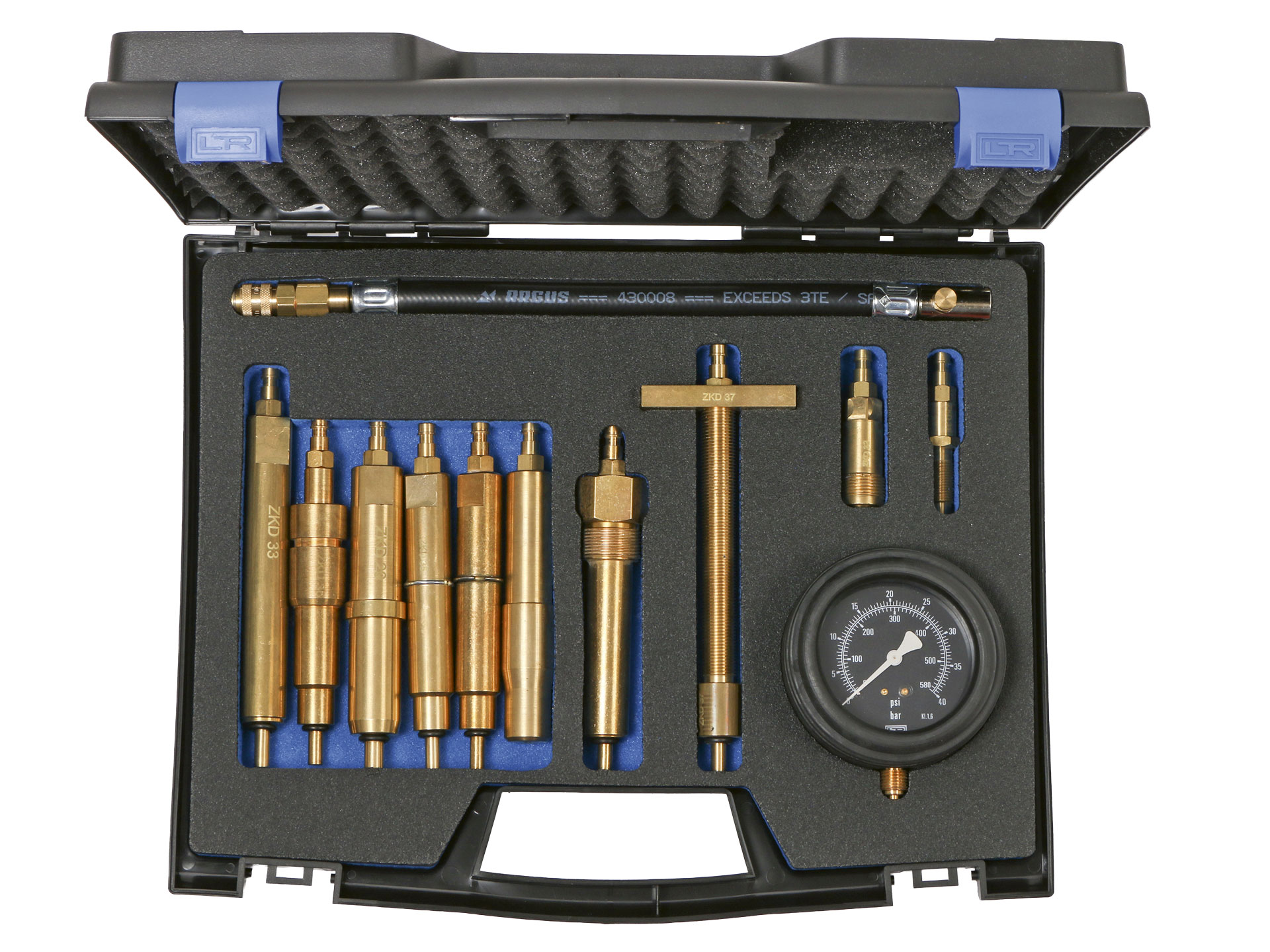
Leitenberger Automotive Test Equipment offers professional compression pressure testers, engine pressure loss testers, crankcase pressure and blow-by meters, as well as test and service tools for engine lubrication and oil service. In addition, digital thermometers, RPM meters, and glow plug unscrewing and extraction tools are available for various diagnostic and maintenance tasks on gasoline and diesel engines.

Frequently Asked Questions About Engine Diagnostics and Engine Testers

Engine problems can have mechanical, hydraulic, thermal, electrical, or electronic causes. Therefore, error codes and sensor data alone do not always provide a definitive diagnosis. Mechanical measurements help to specifically assess the actual condition of cylinders, valves, piston rings, the crankcase, and the lubrication system. Here, we answer frequently asked questions about professional engine diagnostics and the selection of appropriate test equipment.

  • Which tests are particularly important in mechanical engine diagnostics?

    Depending on the symptoms, the following tests may be particularly useful:

    • Compression pressure measurement
    • Engine pressure loss test
    • Crankcase pressure measurement
    • Blow-by volume measurement
    • Engine oil pressure test
    • Temperature measurement
    • RPM measurement

    Which test is required depends on the engine, the symptoms, and the manufacturer’s specifications.

  • What symptoms might indicate a mechanical engine problem?

    Possible indications may include, for example:

    • Loss of power
    • Starting problems
    • Rough engine operation
    • Uneven cylinder performance
    • Increased oil consumption
    • Unusual crankcase pressure
    • Abnormal blow-by volume
    • Oil pressure that is too low or fluctuating
    • Unusual noises

    These symptoms are not definitive. Therefore, targeted measurements should be used to further narrow down the cause.

  • What is a compression test?

    A compression test measures the pressure generated during compression in each cylinder.

    Depending on the engine, the measurement is taken via:

    • spark plug hole
    • glow plug hole
    • injector hole

    using a suitable adapter.

    Using compression pressure testers, the values for each cylinder can be determined and compared with one another as well as with the manufacturer’s specifications.

  • What can a compression pressure measurement reveal?

    The test can reveal whether:

    • a cylinder has a noticeably low compression pressure,
    • several cylinders deviate from the target values,
    • there are significant differences between individual cylinders.

    Low compression, for example, may be related to problems with valves, piston rings, or other components of the combustion chamber.

    However, the compression test alone does not automatically pinpoint the exact cause.

  • Can a compression test be used to determine whether a valve or piston ring is leaking?

    Not clear.

    The compression test initially shows that the pressure build-up in a cylinder is abnormal.

    To then determine more precisely where pressure is escaping, an engine pressure leak test can be performed.

  • What is the difference between a compression test and an engine pressure loss test?

    In a compression test, the engine itself generates the compression pressure to be measured during the starting process.

    In a pressure loss test, on the other hand, a specific cylinder is pressurized using shop compressed air.

    This allows for an assessment of how much pressure is lost and over what range the air escapes.

    Both methods complement each other.

  • Which test should be performed first—compression or pressure loss?

    When this type of fault pattern occurs, the compression in the individual cylinders is often compared first.

    If an anomaly is detected, a engine pressure loss test can then help further narrow down the cause.

    However, the test strategy may vary depending on the vehicle, the fault pattern, and the manufacturer’s specifications.

  • How does an engine pressure loss test work?

    The cylinder to be tested is placed in the position specified for the test and then pressurized with compressed air using a suitable adapter.

    The testing device displays the pressure loss.

    At the same time, it is possible to see or hear where air is escaping from the combustion chamber.

  • What types of faults can be identified during a pressure loss test?

    Depending on where the injected air escapes, this may indicate issues in different areas.

    Possible causes include, for example:

    • a leaky intake valve
    • a leaky exhaust valve
    • piston rings or cylinders
    • the cylinder head gasket or adjacent areas

    The measurement results must always be evaluated in the context of the engine design and the manufacturer’s specifications.

  • Why does the piston need to be positioned correctly for the pressure loss test?

    To ensure an accurate test, the valves of the cylinder in question must be in their designated closed position.

    To achieve this, the engine is positioned accordingly.

    Tools available for this task include TDC tools for determining or setting top dead center.

  • What is the upper dead center?

    Top dead center, or TDC for short, is the highest position of the piston in the cylinder.

    Depending on the cycle, top dead center is particularly relevant during the compression stroke, when the intake and exhaust valves are closed.

    This is important, for example, for an engine pressure loss test.

  • Are there any devices that can test both compression and pressure loss at the same time?

    Yes.

    Leitenberger offers systems in which both diagnostic methods can be combined or used with a shared adapter program.

    One example is the DRV 05_BT Compression and Engine Pressure Loss Tester, as well as corresponding combined test kits.

    Depending on the product, measured values can also be digitally processed and documented.

  • Are all compression and pressure loss testers Bluetooth-enabled?

    No.

    Bluetooth is an additional feature of certain digital devices.

    Traditional analog and other digital testers operate without Bluetooth.

    Therefore, the equipment must always be selected based on the specific product.

  • What are the benefits of digital or Bluetooth-based engine diagnostics?

    Depending on the device, measurement values can be:

    • displayed digitally,
    • stored,
    • transmitted to a mobile device,
    • compared with one another,
    • and

    documented.

    This can be particularly helpful when evaluating multiple cylinders and when providing documentation to customers.

  • Can electronic vehicle diagnostics replace compression testing?

    Not entirely.

    An electronic diagnostic test can, for example:

    • display error codes
    • missed ignitions
    • cylinder contributions
    • sensor readings
    • control variables

    A mechanical compression or pressure loss test, on the other hand, directly examines the actual pressure behavior of the combustion chamber.

    Both diagnostic methods can therefore complement each other.

  • What are blow-by gases?

    Some of the combustion gases can enter the crankcase through the gaps between the piston, piston rings, and cylinder wall.

    These gases are referred to as blow-by or leak gases.

    The amount depends, among other things, on the engine's condition and operating conditions.

  • What does an increased blow-by volume indicate?

    A noticeable amount of blow-by can be an indication of increased gas leakage into the crankcase.

    Possible sources include, for example:

    • Piston rings
    • Cylinder bore
    • Valve guides
    • In turbocharged engines, adjacent turbocharger areas as well

    However, a single measurement should always be compared with the reference values specified for the engine or the manufacturer’s specifications.

  • What is the difference between blow-by volume and crankcase pressure?

    These are two different parameters.

    The blow-by volume describes the gas flow rate and is measured, for example, in liters per minute.

    The crankcase pressure, on the other hand, describes the pressure or vacuum present in the crankcase.

    That is why there are different crankcase pressure and blow-by gauges.

  • Why can the crankcase ventilation system affect the measurement?

    The crankcase ventilation system removes blow-by gases from the crankcase.

    A malfunction or restriction in this system can affect crankcase pressure.

    If the measured values are abnormal, the entire crankcase and ventilation system must therefore be examined.

  • Can a problem with the turbocharger affect the crankcase area?

    Depending on the engine design and the symptoms, the turbocharger and its mounting may also play a role in the diagnosis of the crankcase.

    Turbocharger test and diagnostic equipment is available for further testing.

  • Why is engine oil pressure measured?

    Engine oil pressure is a key parameter for ensuring proper lubrication of the internal components of an internal combustion engine.

    Mechanical oil pressure measurement can be useful, for example, in the following situations:

    • Oil pressure warning
    • Unreliable sensor data
    • Unusual engine noises
    • Suspected problems with the oil pump or lubrication system
    • Inspection after repairs

    Appropriate equipment for such tests is available under Engine Lubrication and Oil Service.

  • Does low oil pressure automatically mean that the oil pump is defective?

    No.

    Low engine oil pressure can have various causes.

    These may include, among other things:

    • Oil level or unsuitable oil
    • Oil temperature or viscosity
    • Engine wear
    • Problems in the oil circuit
    • Oil pump
    • Pressure regulation
    • Filter or intake area

    The cause must therefore be systematically narrowed down.

  • Why does oil pressure have to be measured at the correct temperature?

    The viscosity of engine oil changes with temperature.

    As a result, the measured oil pressure may also change.

    A measured value can therefore only be meaningfully compared to the corresponding setpoint if the specified operating conditions are maintained.

  • What does a professional motor oil service include?

    Depending on the vehicle, this may include, for example:

    • Draining or extracting engine oil
    • Replacing the oil filter
    • Filling with the correct engine oil
    • Checking the oil level
    • Checking the engine oil pressure, if necessary

    Test and service equipment for engine lubrication and oil service is available for these tasks.

  • When can engine oil be extracted instead of drained?

    That depends on the motor design and the manufacturer's specifications.

    For motors designed for this purpose, the motor oil can be extracted through a designated port.

    For such tasks, the pump cluster includes vacuum extraction units and collection containers, as well as other pumping solutions.

  • Why is temperature measured during engine diagnostics?

    Temperature measurements can be helpful during various diagnostic and service tasks.

    Examples include:

    • Comparing the temperatures of different components
    • Monitoring heating or cooling processes
    • Checking for thermal differences
    • Monitoring operating conditions

    Digital thermometers for workshops and diagnostics are available for this purpose.

  • Why is the engine speed measured externally?

    Independent speed measurement can be useful, for example, when:

    • no suitable electronic speed signal is available,
    • an external comparative measurement is required,
    • work is being performed on motors, machines, or rotating components.

    Speed measuring devices with non-contact or mechanical measurement capabilities are available for this purpose.

  • What is the advantage of non-contact speed measurement?

    In optical or non-contact measurement, the measuring device does not need to make mechanical contact with the rotating component.

    Depending on the application, this can simplify the measurement.

    Nevertheless, the specific measurement setup must be safe and suitable for the rotating component.

  • What should you do if a glow plug is stuck?

    Glow plugs that are stuck require special care, as breaking them off or damaging them can result in significant additional work.

    Special glow plug removal and extraction tools are available in various wrench sizes for controlled removal.

  • Is a glow plug tester the same thing as a glow plug removal tool?

    No.

    A glow plug tester checks the electrical or functional properties of the glow plug.

    A removal tool, on the other hand, is used for mechanical removal.

    You can find electrical testers under Glow Plug Testers, while mechanical removal tools are listed in the Engine cluster.

  • What is the appropriate diagnosis when there is a loss of performance?

    That depends heavily on the nature of the problem.

    Depending on the engine, the following can be checked, for example:

    • electronic fault codes and sensor readings
    • compression pressure
    • cylinder pressure loss
    • fuel pressure and fuel injection system
    • intake and charge air systems
    • turbocharger
    • exhaust back pressure
    • crankcase pressure or blow-by
    • engine oil pressure

    A systematic diagnosis should therefore not be too quick to assume that a single component is the cause.

  • What test should be performed if oil consumption is high?

    Increased oil consumption can have various causes.

    Depending on the symptoms, the following may be relevant, among other things:

    • External leaks
    • Crankcase ventilation
    • compression
    • pressure loss
    • blow-by volume
    • valve guides or valve stem seals
    • piston rings and cylinders
    • turbocharger

    Compression pressure testers, engine pressure loss testers, and crankcase pressure and blow-by meters can therefore assist with various aspects of mechanical diagnostics.

  • Welche Motor-Prüfausrüstung ist für eine professionelle Werkstatt sinnvoll?

    The specific equipment depends on the range of vehicles and engines.

    A comprehensive mechanical engine diagnostic test may include, for example:

    • Compression pressure testers
    • Engine pressure leak testers
    • A suitable range of adapters
    • Crankcase pressure and blow-by meters
    • Engine oil pressure testers
    • Digital thermometers
    • RPM meters
    • Supplementary electronic vehicle diagnostics

    This allows electronic diagnostic data to be supplemented by direct mechanical and physical measurements.

Cookie settings
This website uses cookies that enable you to use services offered by external providers, such as YouTube or Google Maps. The legal basis here is Art. 6 DSGVO (1) a.

Here you can object to the anonymized recording of your user behavior by MATOMO. For this purpose, we store a cookie on your computer to respect this decision also on subsequent visits.

Please note that depending on your settings, some functions may not be available.

You can find more information in our Privacy policy

Matomo settings

Attention: When you object to tracking, a Matomo deactivation cookie is set that remembers your objection.