Adjust contrast
Schriftgröße auswählen
Zum Bereich in Leichter Sprache Simple language

Product Search

Pumps and Fluid Handling for Auto Repair Shops

Vacuum and Pressure Pumps for Automotive Diagnostics

Vacuum and pressure pumps enable the targeted mechanical testing of pressure- or vacuum-actuated components independently of the vehicle’s operation. By controlled generation of vacuum or overpressure, it is possible to verify whether actuators respond, whether lines and diaphragms maintain the applied pressure, and whether pressure switches activate at the specified set points.

Autotestgeräte Leitenberger offers vacuum pumps, combined pressure and vacuum pumps, as well as analog and digital models for various testing tasks. Depending on the unit, the measurement ranges extend from -1 bar vacuum to +3 bar pressure; a special pressure pump capable of up to 40 bar is available for testing medium- and high-pressure switches. Supplementary adapters and drainage containers expand the range of applications in workshop and service settings.

Frequently Asked Questions About Vacuum and Pressure Pumps for Automotive Diagnostics

Vacuum and positive pressure are used in vehicles for various control, regulation, and monitoring functions. With a suitable hand pump, such systems can be tested independently of the vehicle’s own pressure or vacuum generation. Here, we answer frequently asked questions about the selection and use of vacuum and pressure pumps in automotive repair shops.

  • What is a vacuum pump used for in an auto repair shop?

    A vacuum pump is used to generate a specific level of negative pressure in order to test vehicle components that operate under such conditions.

    Typical applications—depending on the specific vehicle and system—may include, for example:

    • Vacuum-operated actuators
    • EGR valves
    • Throttle valves
    • Fuel pressure regulators
    • Vacuum modulators
    • Brake boosters or power brakes
    • Heating flaps
    • Other pneumatically actuated components

    It is crucial that the component in question is actually designed to be tested using externally generated vacuum.

  • What is the difference between a vacuum and negative pressure?

    In the automotive sector, the term “vacuum” is often used, although technically it usually refers to a negative pressure relative to ambient atmospheric pressure.

    Leitenberger vacuum pumps, for example, display this negative pressure in the range from -1 to 0 bar.

    The closer the measured value is to -1 bar, the greater the negative pressure generated.

  • What is a pressure and vacuum pump?

    Depending on the switch position, a pressure and vacuum pump can generate either:

    • negative pressure or
    • positive pressure.

    This allows a single device to be used to test various pneumatic functions.

    The Leitenberger HV-90 and HV-95 models, for example, can be switched between vacuum and pressure modes.

  • What is the pressure range of standard pressure and vacuum pumps?

    The corresponding Leitenberger combination pumps typically operate within the following ranges:

    • Vacuum: -1 to 0 bar
    • Pressure: 0 to +3 bar

    This measurement range is suitable for numerous low-pressure and vacuum tests on vehicles.

    However, the maximum possible pump pressure is not a general test pressure for every component. The manufacturer’s specifications must be followed for each specific component.

  • Can I use a pressure and vacuum pump to check whether an actuator is working?

    Yes, if the actuator in question is pneumatically operated or actuated by vacuum or pressure.

    To do this, the pressure or vacuum intended for the actuator is gradually and carefully applied.

    Afterward, the following can be observed, for example:

    • whether the actuator moves
    • at what value it responds
    • whether the position is maintained
    • whether the applied pressure or vacuum is lost

    This allows the mechanical-pneumatic function to be tested independently of the electronic control system.

  • Can an EGR valve be tested using a vacuum pump?

    For vacuum-operated EGR systems, the answer is generally yes.

    If the valve is controlled via a vacuum port, a hand-held vacuum pump can be used to check whether:

    • the diaphragm responds
    • the valve or linkage moves
    • the vacuum generated is maintained

    Modern electrically operated EGR systems, on the other hand, may require a different diagnostic method.

    For further system diagnostics, exhaust system test and diagnostic tools can be used.

  • Can a vacuum tap on the turbocharger be tested?

    For pneumatically actuated turbocharger actuators, a suitable vacuum pump can be used to control the actuator's movement and maintain the vacuum.

    The required test value depends on the specific turbocharger and vehicle.

    For a more comprehensive diagnosis, turbocharger test and diagnostic tools are also available.

  • Can boost pressure be checked using a pressure pump?

    Certain Leitenberger pressure and vacuum pumps are also used for pressure control in turbocharging applications.

    In this context, a clear distinction must be made between:

    • targeted pressurization or functional testing of a test circuit
    • actual boost pressure measurement during vehicle operation
    • leak testing of the intercooler system

    Leak testers for intake and intercooler systems are available for leak testing.

  • Can I use a vacuum pump to find a leak?

    A vacuum pump can help determine whether a sealed test chamber or component maintains a vacuum.

    If the vacuum drops unusually quickly in a suitable test setup, this may indicate a leak.

    However, this does not automatically reveal the location of the leak.

    Hoses, connections, diaphragms, and the connected component must then be examined in detail.

  • Can a leak test also be performed using a pressure pump?

    Yes, provided that the component or system in question is designed for a pressure test.

    The test area is subjected to the permissible pressure under controlled conditions, and then observed to determine whether the pressure is maintained.

    The permissible test pressure must always be based on the specific component and the manufacturer’s specifications.

  • What does it mean if the vacuum that is created drops again immediately?

    Possible causes may include, for example:

    • leaky hose connections
    • damaged vacuum lines
    • a leaky diaphragm
    • a leaky actuator
    • a test setup that is not completely sealed

    However, a drop in pressure alone does not automatically indicate which component is the cause.

    The leak must be systematically pinpointed.

  • What is the difference between the HV 84 and a pressure/vacuum pump?

    The HV 84 is a vacuum-only pump.

    It has a measurement range of:

    • -1 to 0 bar

    with a scale division of 0.05 bar.

    It is designed for testing vacuum functions.

    The HV-90 and HV-95 models, on the other hand, can also generate positive pressure up to +3 bar.

  • When is a vacuum pump alone sufficient?

    A vacuum-only pump is sufficient if only vacuum-operated components are to be tested.

    This may be the case, for example, with:

    • vacuum actuators
    • vacuum-operated valves
    • vacuum lines
    • diaphragms.

    If pressure functions are also to be tested, a combined pressure and vacuum pump offers more application possibilities.

  • What is the HV 90?

    The HV 90 is an analog combined pressure and vacuum pump.

    It offers:

    • Vacuum range: -1 to 0 bar
    • Pressure range: 0 to +3 bar
    • Fine scale: 0.1 bar
    • Analog precision pressure gauge
    • Switch between pressure and vacuum
    • One-handed operation

    The package also includes a plastic hose, a brass cone, and several connectors.

  • What is the HV 90.8?

    The HV 90.8 is also a one-handed pressure and vacuum pump with:

    • -1 to 0 bar in the vacuum range
    • 0 to +3 bar in the pressure range
    • Fine adjustment in 0.1 bar increments

    It is suitable for various pressure and vacuum tests and can be used, for example, with vacuum-operated actuators as well as for appropriate pressure tests.

  • What is the HV 95?

    The HV 95 is a combined pressure and vacuum pump made of aluminum and glass-fiber-reinforced plastic.

    It features:

    • Vacuum range: -1 to 0 bar
    • Pressure range: 0 to +3 bar
    • Precision pressure gauge
    • Double-band fine scale

    It, too, can be operated with one hand and switched between pressure and vacuum modes.

  • What is the difference between analog and digital pressure and vacuum pumps?

    In an analog pump, the pressure is displayed on a pointer-type pressure gauge.

    The digital HVD-90 system, on the other hand, also offers:

    • digital readout
    • bar graph display
    • min/max display
    • peak value memory
    • resolution of 0.01 bar
    • backlight
    • detection of rapid pressure changes

    Both systems operate in the range of -1 to +3 bar.

  • What is HVD 90?

    The HVD 90 is Leitenberger's digital pressure and vacuum pump system.

    The pump can be switched between vacuum and positive pressure and features an 80-mm digital pressure gauge.

    The measurement range is:

    • Vacuum: -1 to 0 bar
    • Pressure: 0 to +3 bar

    The resolution is 0.01 bar.

  • What is the advantage of the HVD 90's min/max display?

    The Min/Max function allows you to save the lowest and highest recorded values during a measurement.

    This is helpful when:

    • the pressure fluctuates
    • short-term pressure changes occur
    • the technician cannot constantly monitor the display

    This allows for a better assessment of dynamic processes than relying solely on a single instantaneous value.

  • Can the HVD 90 detect rapid pressure spikes?

    The HVD 90 operates at a sampling rate of 10 milliseconds, or 100 readings per second.

    This allows the device to detect even brief changes in pressure or pressure spikes.

    This can offer an advantage over a purely analog display during dynamic tests.

  • Is HVD 90 suitable for contact with fuel?

    Leitenberger describes the HVD 90’s pump as a fuel-resistant metal design.

    However, this does not mean that the device is automatically suitable for any work on any fuel system.

    The test setup, connections, pressure range, and specific manufacturer specifications must still be taken into account.

    For actual fuel pressure measurements, fuel pressure testers for injection and low-pressure systems are available.

  • What is HV 90.6?

    The HV 90.6 is a complete pressure and vacuum pump kit.

    It includes, among other things:

    • HV-90 pump
    • Plastic tubing
    • Brass cone
    • Four plastic fittings
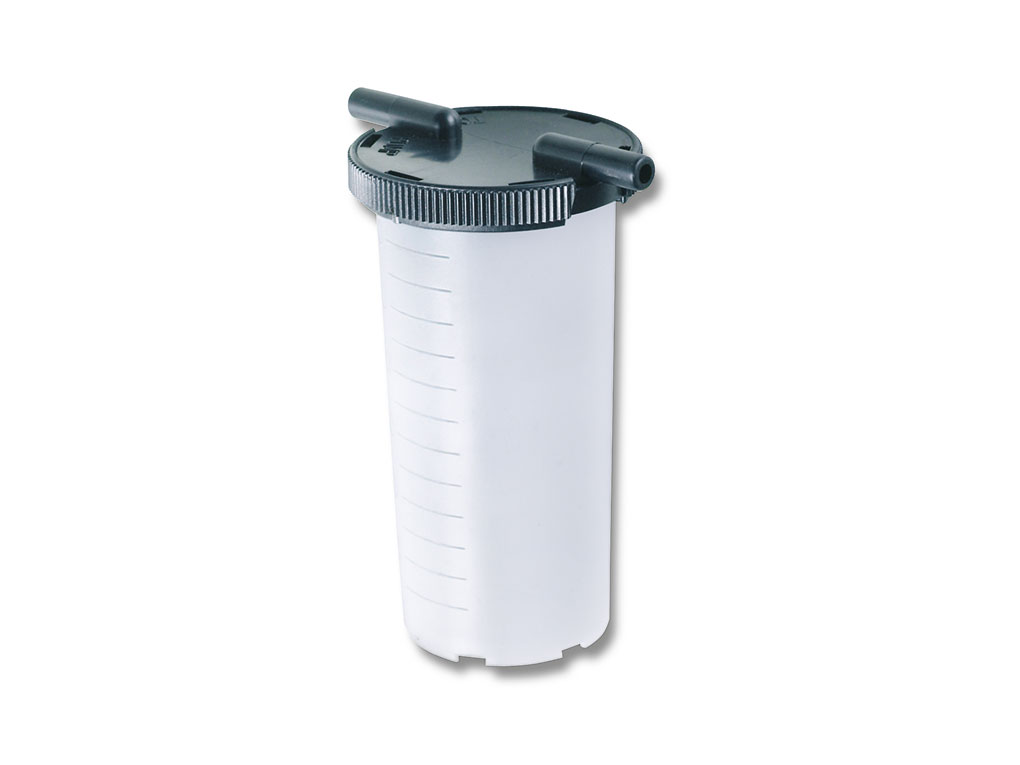
    • HVZ 02 drainage container
    • Plastic case

    The drainage container protects the pump from liquid ingress during venting operations.

  • What is the HVZ 02 drainage tank?

    The HVZ 02 is a 120-ml drainage container for Leitenberger vacuum and pressure pumps.

    It is installed between the pump and the liquid source.

    This allows for proper venting procedures to be carried out without the drawn-in liquid entering the pump directly.

  • Why shouldn't liquid enter the vacuum pump directly?

    The pumps are primarily designed to generate pressure and vacuum.

    Intruding liquid can contaminate the pump or impair its function.

    The drainage container for vacuum and pressure pumps therefore serves as a collection container between the test object and the pump.

  • Can a pressure and vacuum pump be used for venting?

    When used in conjunction with a suitable drainage container, these vacuum pumps can be employed for specific bleeding operations.

    The HVZ 02 prevents the extracted fluid from entering the pump directly.

    However, for routine work on the brake system, brake bleeding units designed specifically for this purpose are the more suitable product category.

  • What is KDV 01?

    The KDV 01 is a combined hand pump for pressure and vacuum.

    It operates within the following range:

    • -1 to 0 bar vacuum
    • 0 to +3 bar pressure

    and is designed for two different applications, among others:

    • as a pressure pump for suitable cooling system tests
    • as a vacuum pump for vacuum functions

    For comprehensive cooling system tests, the cooling system testers for pressure and leak testing are available.

  • Can I use a pressure and vacuum pump to test a cooling system?

    Yes, if you use the appropriate pumps and vehicle-specific adapters.

  • Can air conditioning pressure switches be tested with these pumps?

    Yes, there are special pump models available for this purpose.

    The HV 90.2 is designed for low-pressure switches and operates in the range of -1 to +3 bar.

    The HV 90.3 is a pressure-only pump for medium- and high-pressure switches and operates up to 40 bar.

    To find the right device for your specific application, see Test Equipment for Air Conditioning Pressure Switches

  • What is HV 90.2?

    The HV 90.2 is a pressure and vacuum pump designed for the mobile testing of low-pressure switches.

    The measurement range is from:

    • -1 to +3 bar

    This allows, for example, the on and off points or the switching differential of a suitable pressure switch to be checked.

  • What is HV 90.3?

    HV 90.3 is a special pressure pump with a rotary spindle and a relief valve designed for testing medium- and high-pressure switches.

    The measurement range is:

    • 0 to 40 bar

    This allows for the testing of defined switching points or the switching differential of suitable pressure switches.

  • Why does the HV 90.3 have a significantly higher pressure range than standard hand pumps?

    Medium- and high-pressure switches operate in higher pressure ranges than typical vacuum or low-pressure actuators.

    Therefore, a specially designed pump is required for this application.

    The HV 90.3 is designed for this task and should not be equated with standard -1 to +3 bar pressure/vacuum pumps.

  • Can the HV 90.2 and HV 90.3 be used only to test air conditioning pressure switches?

    Leitenberger also lists applications in:

    • pneumatic brake systems for commercial vehicles
    • oil pressure switches

    Whether a particular pump is suitable for a specific switch depends on the pressure range, connection, and test specifications.

  • How is the switching point of a pressure switch tested?

    The pressure switch is connected to the test device using a suitable adapter.

    The pressure is then gradually increased—or, in the case of a low-pressure switch, adjusted accordingly.

    During this process, the pressure value at which the electrical switching state changes is observed.

    For the specific test, the permissible pressure range, the electrical test setup, and the manufacturer’s specifications must be known.

  • What is the switching differential of a pressure switch?

    The switching differential, or hysteresis, is the difference between:

    • the make point and
    • the break point

    of the pressure switch.

    Using a suitable test pump, both values can be determined and then compared with the manufacturer's specifications.

  • What adapters are needed for testing pressure switches?

    The HV 90.2 and HV 90.3 feature a connection with a 7/16"-20 UNF male thread.

    Leitenberger offers various HVA adapters for different connection threads and sealing geometries.

    The required adapter depends on the pressure switch being tested.

  • Can an electronic diagnostic tool replace a vacuum or pressure pump?

    Not entirely.

    For example, an electronic diagnostic system can:

    • display or trigger
    • error codes
    • sensor values
    • control signals

    electrical actuators.

    An external pressure and vacuum pump, on the other hand, checks the actual pneumatic or mechanical function of a component independently of the vehicle’s own pressure or vacuum generation.

    Both methods can therefore complement each other during troubleshooting.

  • How do I choose the right vacuum or pressure pump?

    The following factors are particularly important:

    • Required vacuum or pressure range
    • Analog or digital display
    • Component to be tested
    • Required adapters
    • Desired min/max or peak value function
    • Need for a drainage container
    • Desired scope of delivery

    For pure vacuum tests, a vacuum pump may be sufficient. A pressure and vacuum pump is suitable for combined tests. For pressure switches with higher switching points, however, a specially designed high-pressure pump is required.

    You can find additional pumps for extraction, transfer, and dispensing tasks under Pumps and Fluid Handling for Automotive Workshops.

Cookie settings
This website uses cookies that enable you to use services offered by external providers, such as YouTube or Google Maps. The legal basis here is Art. 6 DSGVO (1) a.

Here you can object to the anonymized recording of your user behavior by MATOMO. For this purpose, we store a cookie on your computer to respect this decision also on subsequent visits.

Please note that depending on your settings, some functions may not be available.

You can find more information in our Privacy policy

Matomo settings

Attention: When you object to tracking, a Matomo deactivation cookie is set that remembers your objection.